This post was actually supposed to come out in December but ended up being ”hanging” among drafts. Since I know that many are interested in biochar, I am publishing it now, even though it is about cozy Advent, a corona-adapted one.
A proper fire in the burning barrel, Portuguese kale soup on The Anila stove, pumpkin cake with mulled wine and a bunch of other delicious cookies that the guests brought. How cozy it was to have it in the December darkness!
Despite the fact that we build compost piles everywhere, every year a pile of things that need to be burned arises. The dry, windy springs are not suitable for burning. December burning will probably become the new tradition!
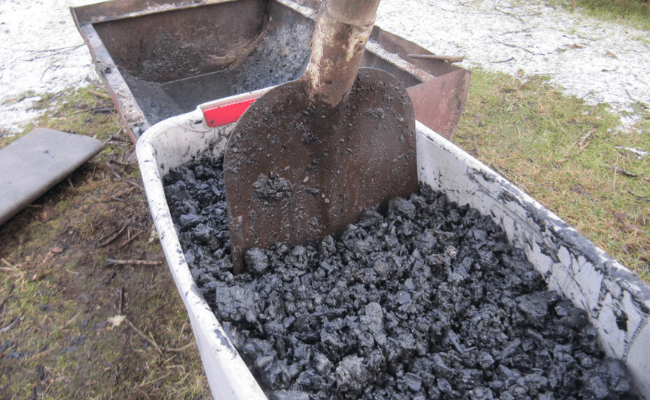
When the guests went home, I extinguished the fire with water and stirred until everything had completely cooled down. The next day, I picked out some nails and there were 100 liters of biochar left after four hours of enjoyable burning.
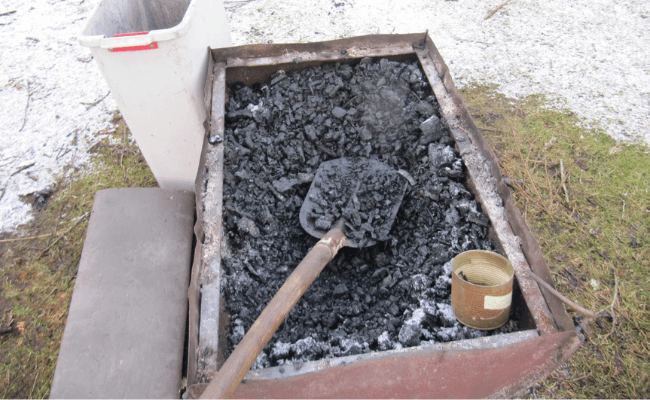
Biochar is simply charcoal and is an extremely porous material. When biochar is added to growing soil, the soil's ability to retain moisture and nutrients increases, properties that we greatly benefit from with our light Småland soils and the increasingly unreliable rains.
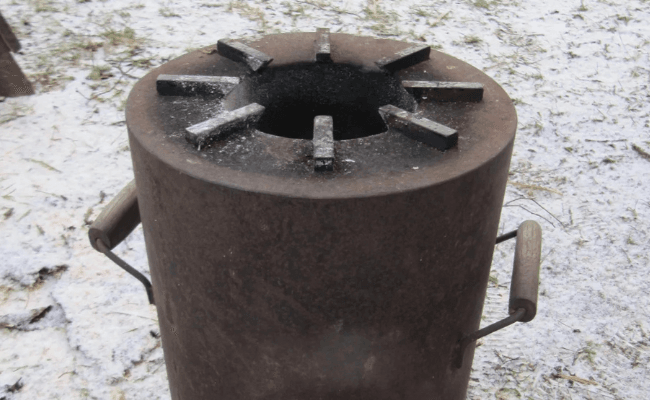
Biochar can be produced in different ways. The one described above is the simplest and absolutely the most enjoyable :-). Another way, for those who burn in a wood boiler, is to restrict the oxygen supply when there are only embers left by turning off the fan. Then a small portion of biochar is formed with each burning. A third way is The Anila stove. It is clever because you can cook on it at the same time, but it doesn't produce much charcoal at a time and the material that is carbonized needs to be finely divided for it to work. The Anila stove is also not mass-produced. I had a blacksmith build one for me based on the Indian design.
Before biochar is used as a soil amendment, it needs to be charged with nutrients because uncharged biochar takes nutrients from the soil, resulting in nutrient deficiency for the plants. The simplest way to charge it is to fill a bucket or tub with biochar, pour concentrated urine over it so that it covers, and let it sit for a couple of weeks. It is also possible to use nettle water or leachate from bokashi to charge the charcoal. I usually like to charge my biochar with microorganisms as well, so when I turn the compost in early summer, I not only mix in green mass but also urine-charged charcoal. Eventually, the charcoal ends up mixed with compost soil in the garden bed.
It can be advantageous to finely divide the charcoal by stepping on it or chopping it with a spade or a stick. Larger amounts of biochar can be finely divided in a compost grinder, but not if, like me, you burn old wood that may contain the occasional nail. It is good if the charcoal is finely divided, but it doesn't have to be powder. Eventually, the pieces break down in the soil. But the amazing thing is that the charcoal itself does not break down, not for several thousand years! That is how long the soil-enhancing property lasts, and as long as the carbon atoms remain harmless in the ground – the element carbon, which during normal combustion or composting would have been released in the form of the climate-impacting gas carbon dioxide into the atmosphere. .
A grower says that she thinks it seems like the snails avoid the planting beds where she has added biochar. If that were true, it would be fantastic! Those who try will see for themselves…