Leader
Locally led development through Leader means that you get involved in the development of your area and can receive support for your development projects. Leader is a method where the private, non-profit and public sectors work together to contribute to local development.
What is Leader?
Leader is a method for rural development that was introduced by the EU in 1991. The method focuses on local ownership, initiative and commitment. The idea is that development of your particular place is most effectively carried out by those of you who live and work there – by you, your association, local businesses and other organisations. You are the ones who know what needs and challenges need to be met.
Film – We are Leader Sweden
Local Development Sweden (LUS) has launched a film to spread knowledge and inspiration about Leader.
The film spreads knowledge about what a Leader project can be, but will also inspire interested rural residents to seek contact with Leader areas around Sweden.
What does Leader mean?
Leader is an abbreviation of the French phrase Liaison Entre Actions de Développement de l'Économie Rurale. That means Coordinated activities for rural economic development.
Financing
Leader support, which is distributed to various projects, comes from the EU (European Agricultural Fund for Rural Development), the Swedish state, municipalities and sometimes regions. During the period 2023–2027, there is a total of approximately SEK 1.7 billion to strengthen the competitiveness and development of Sweden's rural areas through Leader.
Who can apply for leader support?
Support can be sought by associations and companies as well as other organizations.
Project support can be applied for by organizations and associations. It is for projects with broad support that benefit many people or the general public.
Project support for companies is aimed at organizations and companies. This support should benefit one or a limited number of actors. It could, for example, involve developing a product or service.
Leader areas in Sweden
To ensure a local focus, the Leader method is operated in geographically defined areas, so-called Leader areas. To form a Leader area, local actors from the non-profit, private and public sectors must come together and work towards a development strategy. This should be based on the needs and conditions of the specific area. The strategy describes, for example, what needs to be done to increase employment, attract more new companies and make the area attractive and competitive.
The local development strategy forms the basis for the Leader area's budget, a budget decided by the Swedish Board of Agriculture. From the Leader area, residents and businesses in the area can apply for money to run projects. Projects that are granted support must contribute to achieving the goals in the development strategy. Each Leader project can thus be seen as a piece of the puzzle that, together with all other projects, contributes to fulfilling the area's goals and vision.
There are 40 leader areas in Sweden, and if you count them throughout the EU, there are over 3,500. All leader areas are their own associations and you can easily search for your area at leadersverige.se
Impact of some Leader projects that have been implemented in Sweden

Astrid Lindgren's hometown
The whole person Vetlanda

Leader Bohuslän
Young in Bohuslän

Leader Göta River & Säve River
Timber framing of overnight cabin

Leader Sjuhärad
Fritsla VIK ski activity area

Astrid Lindgren's hometown
Safe playground
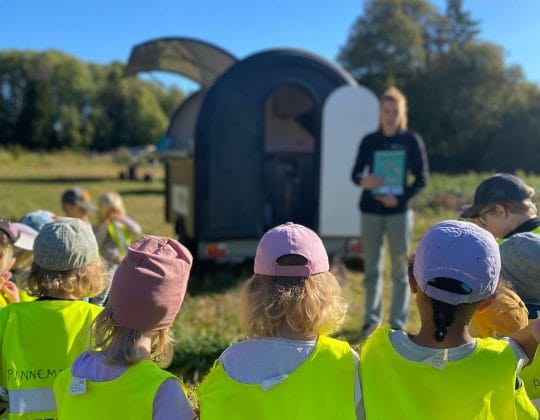
Uppland countryside
The Circular School on Wheels

Leader Bergslagen
Ett idrottsstarkt Bergslagen
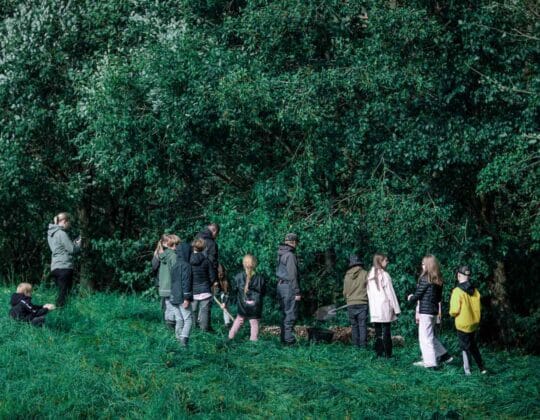
Leader Sjuhärad
Water in school and School Creek
Leader's Seven Basic Principles

1) Bottom-up perspective
The ideas come from those of you who live and work in the area.
2) Local perspective
The ideas have local roots and take into account local strengths, opportunities, resources and challenges.
3) Three-way partnership
Actors from the public, private and non-profit sectors collaborate.
4) Local strategy
The initiative is in line with the local development strategy.
5) Network
The effort contributes to creating new networks.
6) Innovation
The initiative is new to the applicant or the area.
7) Collaboration
Several actors are collaborating to implement the initiative.