On some of the garden visits we have talked about water and irrigation and I have received several tips on smart solutions. The best thing is if you can collect and save rainwater from the roofs to use in your crops, but also be prepared in case there is no rainwater to collect. By covering the soil with organic material, evaporation is reduced and the soil becomes more humus-rich and alive, which means that it can hold and transport water better. It is also better to water with drip irrigation or other slow irrigation that ends up at the roots, than using sprinklers where a large part of the water evaporates.
Established perennials need significantly less watering than annuals, and plants with small roots, such as lettuce, need more water than plants with long roots. New seeds and young plants need water continuously, but in general it is better to water infrequently and a lot than little and often. The type of soil you have also matters. By knowing more about your soil and the needs of your plants, it is easier to water wisely. It is good to test dig in the soil after watering to see how far down the water has come.
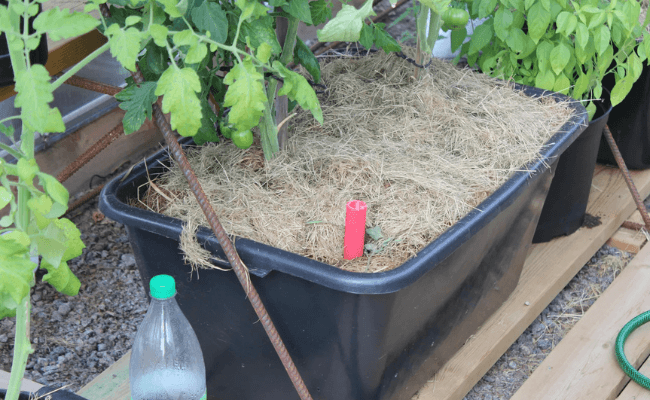
In the book Harvesting rainwater There are many tips on how to use and save water, but also prepare the garden for heavy rain and wet periods.
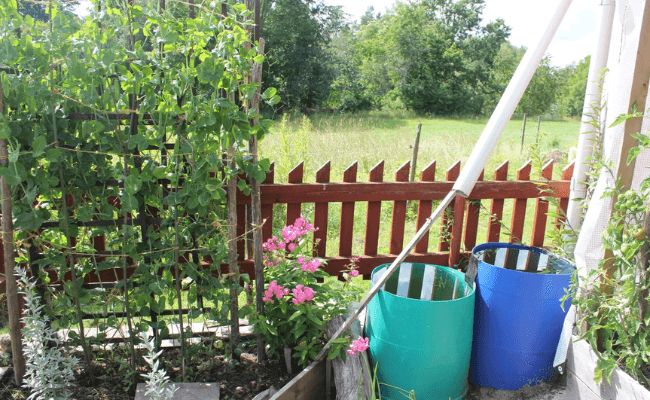
Rainwater collection in Sandshult. There are also special water ejectors that can be mounted on the downspout if you want to be able to choose whether the water should be saved or continue downwards. By connecting barrels in series, the storage capacity increases.
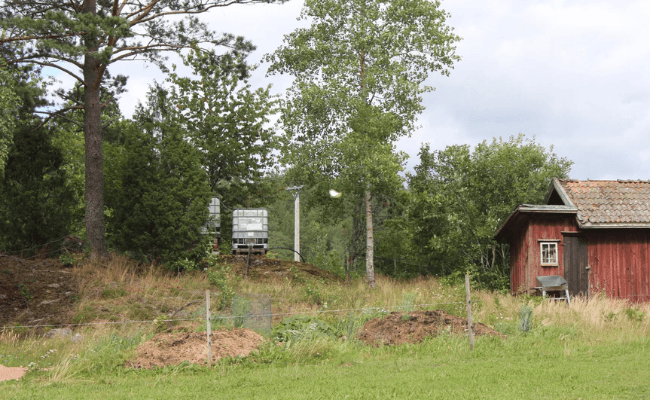
On a rock outcrop between two cultivation areas, IBC tanks are filled with water from the lake using a tractor-driven pump. Then the natural pressure does the rest – the water flows automatically down to the cultivations via water hoses. If you don’t have a rock outcrop, you can build a scaffold to bring up the water and increase the natural pressure. Another alternative is to use a submersible pump, but then you are dependent on electricity.