Hillevi:
Anyone else still have fresh tomatoes lying around on the kitchen counter?
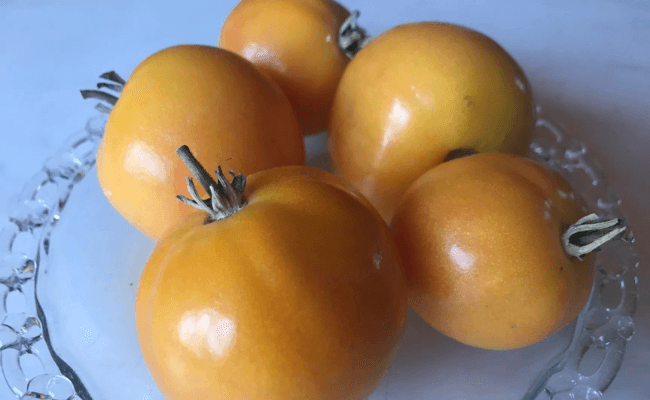
Red in Yellow out after this beautiful and delicious pienollo tomato that we still eat.
For me, this whole pienollo tomato thing is relatively new. The Italian name really just means that these are tomatoes that you hang up. They are hung up to ripen slowly indoors after harvest and can then be eaten during the winter. In Swedish, they are often called ”eternal tomatoes”.
I have tried a few different varieties. Some do not tolerate storage at all in my experience, even though they are sold as pienollo. But now I have found a favorite. This variety is called ”Red in Yellow out” and looks just like that, which also makes it very decorative when it hangs like golden clusters on the curtain rod during the dark season. The tomatoes are round and large. The ones in the picture are the last, smallest ones.
It feels incredibly luxurious at this time of year to add fresh tomato slices to your pizza or omelet. Sautéing onion and garlic and then adding the tomato slices to the hot pan at the end is also a delicious side dish reminiscent of summer.
It's not a salad tomato. I've tried a few varieties that would work for salads but they couldn't be stored. In a way, quite logical. It's the sun's rays as the plant ripens that create the sweet and sour taste we're looking for in a salad. Something should also distinguish the seasons!
Grow more legumes
This year I have grown more legumes than before and it has been a good year for peas and beans. More legumes means a higher degree of self-sufficiency since legumes are among the things we still buy in the store. Different varieties give a long harvest period and there is also food for the winter in the form of dried black beans and snow peas.
Legumes are full of nutrients, not only protein, but also important minerals and resistant starch that is good for the intestinal flora.
Legumes also contain some substances that are not so good for digestion. But these are destroyed when heated. That is why you should always cook peas, beans and broad beans. The only exceptions are sugar snap peas and very young snow peas. There are no exceptions for beans. Broad beans should not be eaten raw either.
While legumes are tasty, filling and nutritious, the plants are also soil improvers when grown. Not only because they cooperate with nitrogen-fixing bacteria that enrich the soil with nitrogen for the next crop, but also because legumes stimulate the formation of mycorrhiza, long thin fungal hyphae that will remain in the soil and help the next crop with the nutrient and water supply in a symbiotic interaction. We receive this service under one condition: That we do not tear apart the invisibly thin mycorrhiza hyphae with soil cultivation, such as turning the soil or – even worse – milling… (don’t do that!).
Peas
Peas have been grown in our country since ancient times. They are adapted to our climate and can therefore be sown early in the season. They can tolerate cold soil but must never be deprived of water.
Sweet peas
Sweet peas are grown for their sweet pods. This year I have grown three varieties that have ripened one after the other: The fast yellow sweet pea Märta which is so easy to pick because the colour differs from the foliage, the fine eyed sweet pea Boaryd and Lokförare Bergfälts jätteärt which has huge pods that never become stringy. All of these are local old varieties collected through the Seed Appeal where individuals have submitted seeds for peas that have been passed down in the family.
Wild pea, Stone pea, Marguerite
Peas grown for their green seeds are called snap peas and are what we buy when we buy frozen peas at the store. But the homegrown older varieties are a completely different taste experience and are also more filling!
New for me this year is the Stensärten Norrhult. The Stensärten is a variety of the pea that was bred in the 19th century and produces taller plants and larger peas. The special thing about Norrhult is that the family that grew this pea is from Södra Vi here outside Vimmerby and that I received the seeds personally from the gold pea prize winner Elsa's daughter Wiola who happened to visit my neighbor this spring. I thank you and bow! The peas are really worth growing, tasty, healthy and rich.
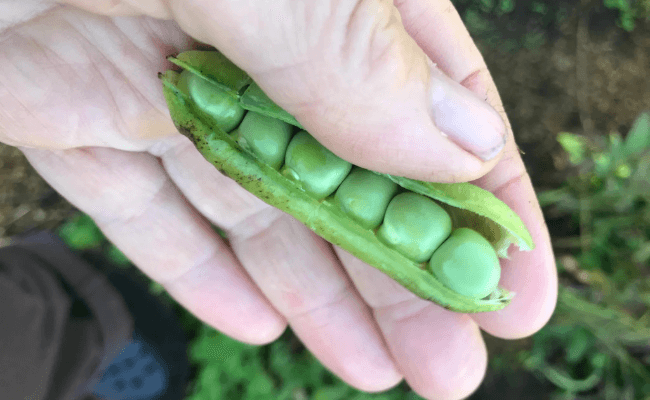
For several years now I have also been growing the Märgärten Adelöv. This is also an old variety from Småland that is grown for the immature seeds. Adelöv has even larger and very sweet peas. The pods are so well-fed that the peas really crowd inside the pod!
Grey pea, Blue pea
A practical way to store peas for the winter is to let them ripen completely on the plant and then thresh the dry peas. This is how our yellow soup peas are produced. For the home grower, I recommend the tall varieties that give a large harvest in a small area.
For a few years now I have been growing Bishop's peas. A really good peas with an incredibly concentrated and nutritious texture. Peas are very good for making hummus, for example. Simply boiled in salted water, a few tablespoons on the plate are enough to provide protein and a wonderful feeling of satiety to any vegetarian plate.
New for me this year is the Gotland Blue Pea. It is a delight to the eye with its blue-purple pods. The seeds are slightly smaller than the Bishop's and it remains to be seen what they taste like.
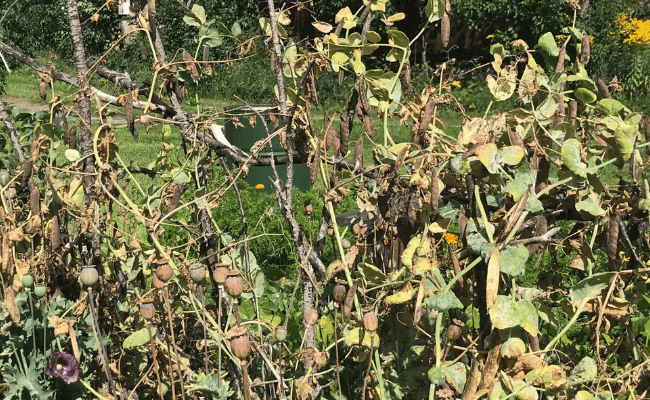
Märta, the yellow sugar pea, can also be used as a grey pea. I haven't tried that yet but that's how it has been used historically. The seeds are quite small, we'll see how they taste.
The different ways peas can be eaten are forgiving for those who don't have time to harvest everything at their optimal stage. Of course, we always save plenty of pods to dry on the plant for seed. But if it happens that the snow peas have also matured on the bush, more than what is needed as seed, there is always the option of boiling the seeds and treating them as snow peas!
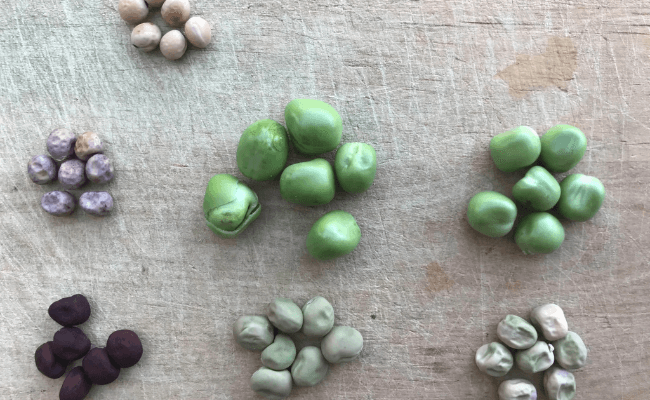
From top left: Bishop's grey pea, Gotland blue pea, Boaryd's eye sugar pea (note that it incorrectly said Märta here before, the seeds from the sugar grey pea Märta look more like the Gotland blue pea, just without the blue-purple color)
Second row from left: Marguerite Adelöv in mature and immature stages
Third row from left: Stone tern Norrhult from Södra Vi in mature and immature stages
Beans
The beans (except broad beans) all originate from South America and have a short cultivation history in our country. They are more sensitive to cold and many varieties require a longer warm season than we have in our latitudes. But there are also varieties worth growing for us here in Småland.
Break beans – high and low
This year I grew a super-fast snap bean, ”Speedy”. It wasn’t exactly a delicacy, but it produced ready-made ”Haricot Verts” in the greenhouse before the other beans had even started to bloom. Of course, it was still better than anything the store offers in the way of beans.
If you want a fast bean variety, you have to go for the bush beans. The climbing sturgeon beans can give a much higher yield per square meter but require more time to develop the plant before it can start delivering. If frost comes early, you may not have a harvest. It's a trade-off.
An important reason why I still choose sturgeon beans is that it looks so beautiful in the garden with the space-creating climbing plants. Another is that they are easy to pick and don't risk mold in a damp autumn because they hang airy high above the ground.
A reliable variety is Blaue Hilde. It is extremely rich in yield, tasty, and even the rather coarse pods can be eaten without becoming stringy.
Kentucky Wax is a climbing wax bean worth growing and Neckarkönigin is a green snap bean.
The star of my bean crop, however, is Sigrid's bean from Loftahammar. (It's so fun with all these local connections!). Sigrid's bean is green, short and a bit lumpy. It has a slightly lower yield than the other varieties but is the tastiest!
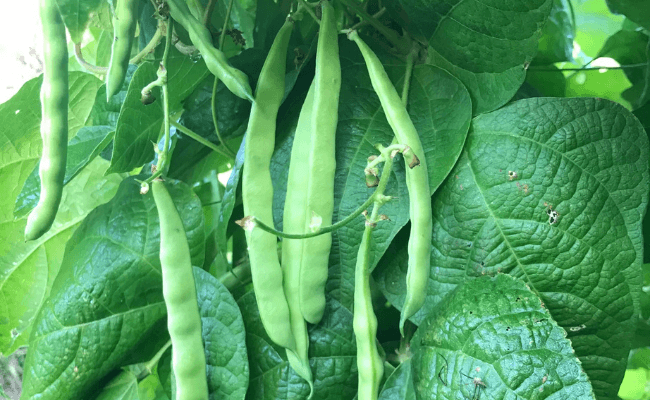
The tastier the vegetables, the easier the cooking. We don't have to bother with complicated procedures in the kitchen. Simply steam Sigrid's beans and serve with a little oil and herb salt on top!
Flower beans, rose beans, purple beans
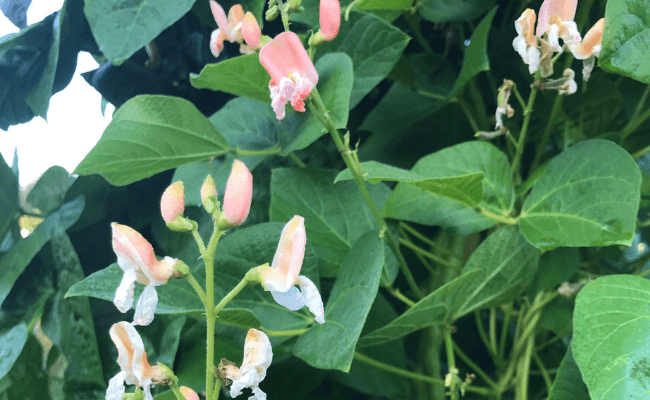
In Sweden, runner beans are grown, as the name suggests, mostly for their flowers. It's a shame because there is potentially a lot of food to be had here. The pods, which grow large, should be harvested young. We cut them into small pieces and boil them in hearty autumn stews. In England, there is a completely different tradition of growing these for food, and they are called "runner beans" there.
This year I have a new acquaintance in the garden. It is a flowering bean that I got from a childhood friend's mother who got it from her English mother-in-law when she got married in the 50s. It has beautiful light pink flowers and produces beans that are large and green but not as coarse as the varieties I have previously grown. It looks promising and I will now try to find out what the variety is called. I may be the only one growing this variety in Sweden...
Spirit beans
In my greenhouse, borlotti beans are climbing, creating a jungle-like atmosphere. They are late, the first small fruit bodies are now starting to appear and many flowers are still there. Borlotti beans can be eaten in three ways: 1) whole pods, 2) sprouted fresh seeds, 3) sprouted dried seeds, all cooked of course. I don't eat the pods, we have snap beans for that during the summer. But when the seeds have formed in September, we cook the sprouted fresh seeds. It's a real delicacy!! What we don't have time to eat during the autumn is left to hang and dry on the plant. Then the beans are threshed out and stored as dry cooking beans.
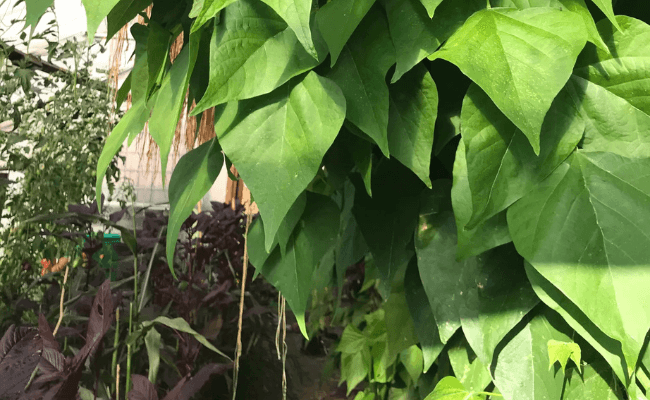
I also have low-growing borlotti beans. The use is the same but the low-growing ones are a little faster and therefore do well outdoors.
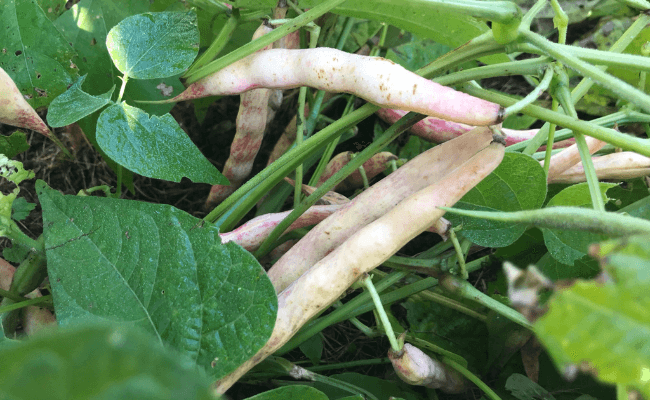
The crowning glory is a Swedish liquor bean. It is called Mor Kristin's bean. Mor Kristin lived in the Kisa region. So here too we have a variety adapted to our climate, which means that it is a little faster than the Italian borlotti. Mor Kristin's bean is good, rich and is used in the same way as borlotti beans. Next year it may replace borlotti completely here, when I have managed to multiply enough of the seeds that I received from Mor Kristin's sister's grandson!!
Seed
A practical feature is that peas and beans are self-fertile. Therefore, it is easy to take your own seed and in this way, valuable varieties have been passed down from generation to generation without crossing.
An exception here is the broad bean, which I haven't talked about at all above. The broad bean is a must for the self-sufficient person. (See previous blog posts) It is a separate species and does not originate from South America like the other beans. It is not a pea either, but it is similar in that it can withstand cold climates and likes to be sown early. The broad bean is to some extent a cross-fertilizer, which is why I only grow a single variety and also make sure that my neighbors grow the same variety (provide them with seeds) to avoid unwanted crosses. By selecting for desired characteristics, I can get a strain that is adapted to this location after just a few years.
Most of the varieties I mentioned above can be obtained by becoming a member of the association SESAM, the association for seed production and protection of cultivated plants in Sweden.
What are your favorite varieties of legumes? Feel free to write in the comments section or in the FB group Cultivation as a lifestyle.
What are you sowing right now?
The question surprised me when it came via text message the other night. How could the sender know that I was just sitting there fiddling with small seeds and the seed tray in the kitchen at the beginning of July when everything was finally going to be planted out and ready?
The last thing I sowed outdoors was actually carrots. I usually sow a late batch of carrots around midsummer and they usually turn out the best. I'm always surprised that they actually have time to grow back in the fall.
What I was doing when the text message appeared was sowing head cabbage that we will eat during the spring-winter season. Varieties that can overwinter outside.
This winter growing thing is not as easy as it sounds. No matter how much we insulate or heat up, the winter light from November to March is not enough for photosynthesis and thus nothing grows. That's why I'm sowing now. My cabbage plants will grow during the summer and autumn and then be ready to harvest under the snow.
By growing small plants in the tray, I can make optimal use of the space. Where the first potatoes have already been harvested, lettuce plants are now growing, and then cabbage plants take their place.
Last year was the first time I tried this with winter cabbage. However, it should be said that I am several weeks later with the planting of the winter cabbage this year compared to last year. Hopefully not too late.
The important thing to keep in mind when sowing this time of year is to choose varieties with a short development time. The cabbage heads should be ready to grow by the end of October. Reputable seed companies state the development time in days. If the cabbage is to be left outside over the winter, the variety also needs to be frost-resistant, which the seed company should also be able to provide information about. Here is what I have just sown:
- Savoy cabbage Wirsing Marner Grüfewi for overwintering outside (did great last year, bought the seeds from Germany Dry seeds, time for Swedish seed companies to bring in this superb variety!)
- The white cabbage Brunswick for overwintering outside (seeds from Impecta, this will be the first year I try the variety)
- Red cabbage Red Express (I have grown it many times before and was annoyed that the heads would rot before it was time to make the Christmas red cabbage salads. With this late sowing I am hoping for fresh red cabbage heads in December. Only 63 days of development time)
- The pointed cabbage Kalibos with only 65 days of development time, I also thought we could eat in late autumn.
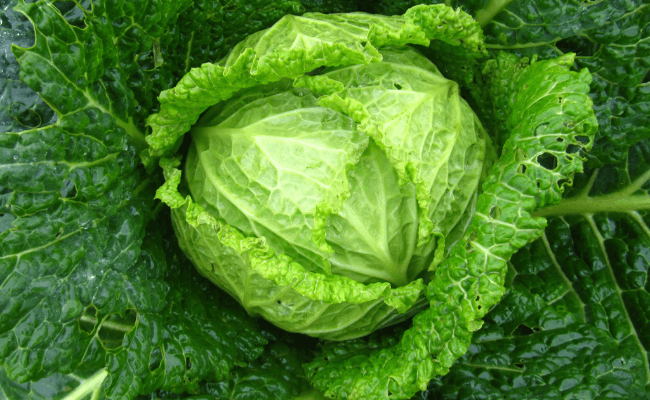
Savoy cabbage Marner Grüfewi on October 31st last year, ready for overwintering.
It is important to remember before overwintering that the plants should not be in soil that is too wet and compact. Raised beds are ideal for overwintering cabbage. Otherwise, there is a risk that the cabbage will rot when the weather changes between plus and minus degrees.
Salad and rosé
What else did I sow that evening? Well, lettuce of course. Lettuce is never a must. That's why I sow lettuce every two or three weeks in the plug tray or micro cubes from the end of March to mid-July. It's so practical to have seedlings on hand to push down here and there when gaps arise in the crops.
In addition to regular lettuce, head lettuce and bind lettuce, I also like to sow rosé lettuce at this time of year, which botanically does not belong to the lettuces but is a chicory plant, i.e. related to endive. A favorite variety is Treviso Red which is deliciously white-pink and remains ready for harvest for a long time. Another variety I will try this year is Palla Rossa, both from Runåbergs. It seems that Rosé lettuce can grow with less light than other lettuce. Last year, many lettuce heads happened to end up in the shade of tall growing cabbage. While regular lettuce was fading away, the rosé lettuce stood nicely and grew in the shade of the cabbage plants. That should make it a good autumn crop. In addition, rosé lettuce is cold-hardy. Last but not least, it contributes a wonderful taste and color experience.
For a few years now, I have successfully overwintered lettuce under fiber cloth and bubble wrap in a greenhouse. (This year, unfortunately, there was no harvest for humans because the mice ate everything.) The best time to sow lettuce that will be overwintered in this way is August. The lettuce should not be fully grown when overwintered, but should be in the starting holes and growing large in early spring.
Soon I can sow outside again. I have another bed of early potatoes and when it is up I direct sow Asian leafy vegetables there such as Pac Choi, Tatsoi etc. After the onions I sow daikon radish, radish and turnip. All of this can be harvested well into November. Yes, I have actually harvested radishes in winter one year too when the snow came before the frost and lay as a protective blanket over it.
I promise, the radishes sown in mid-July are the tastiest of the year. No flea infestations, no bitter taste from the early summer drought. Autumn is the time for cabbage and you can still sow quick varieties!
The time of perennial vegetables
It has been cold weather but the sun is really warm when it shines through. Today I raked away the mulch around the asparagus and put a piece of non-woven fabric over it so that the soil there warms up faster. Otherwise, the mulch can keep the cold in the soil.
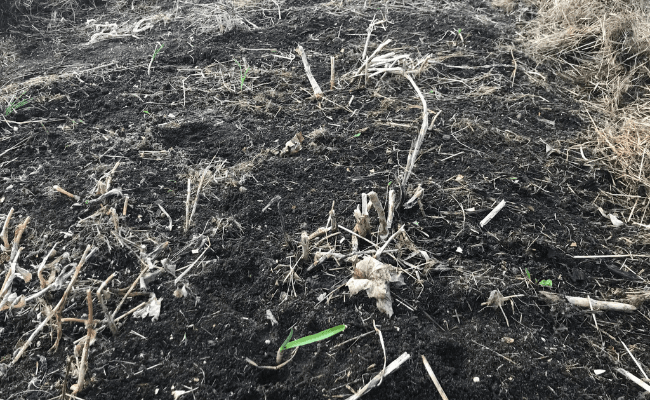
The garlic is already looking up. It is able to climb up through the silage that I covered with after planting in the fall. Now it needs water and nutrition (gold water 1+8)!
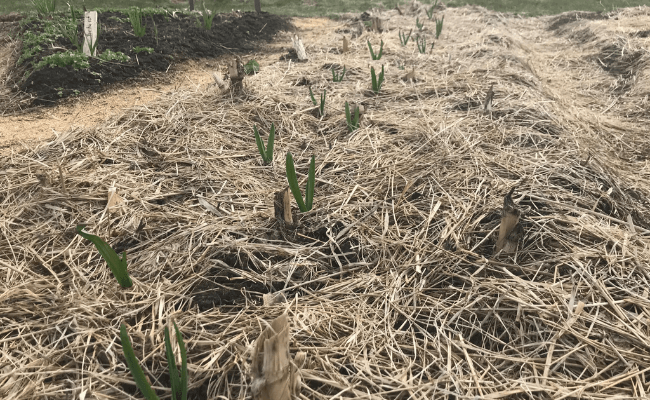
So happy with the perennial vegetables that yield a harvest so early in the spring. Here comes the spinach. It also does well with water this time of year.
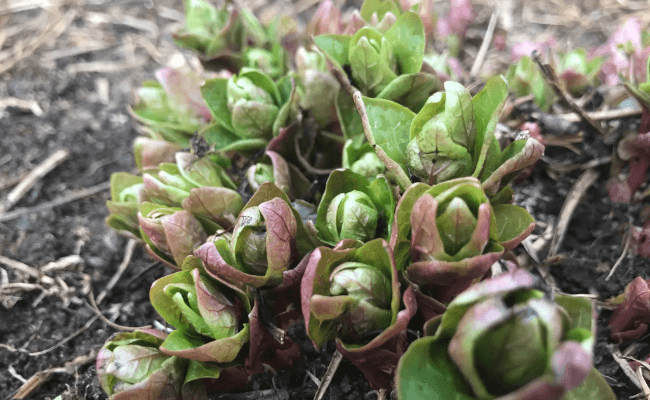
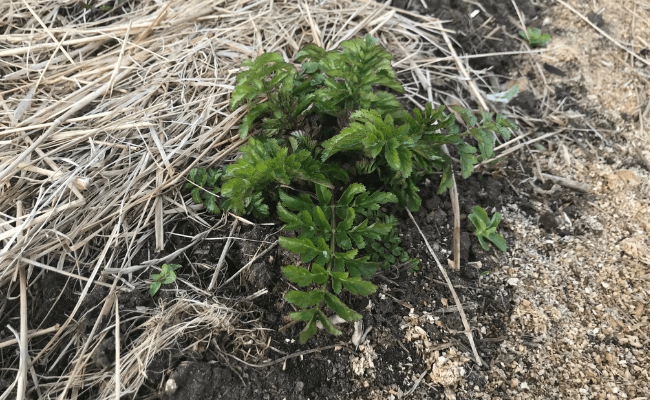
Overwintered parsnips are tastier than those that have been stored in the cellar. The tops are also edible.
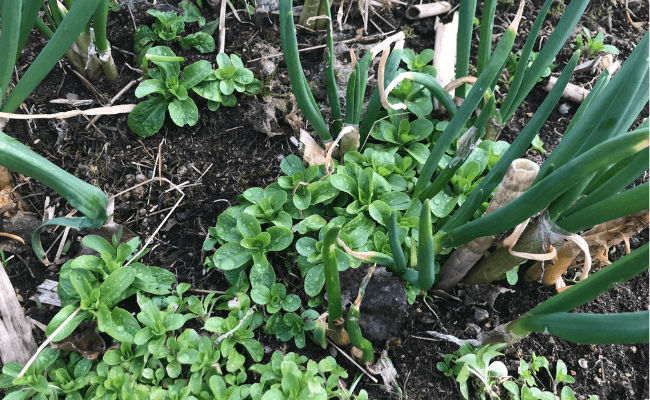
The winter lettuce and spring onions are already ready to harvest. They are also doing well from today's rain-mixed snow.
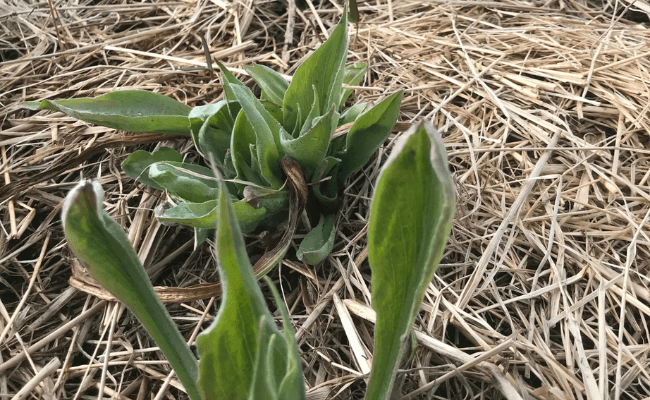
The overwintered black roots become an early summer delicacy. The leaves can be eaten in salads, but I leave them to allow the roots to grow larger for the harvest in early June when the beans will be planted in their place.
We already use pennywort in salads along with pea shoots, sunflower shoots and microgreens from cabbage plants that grow on the windowsill.
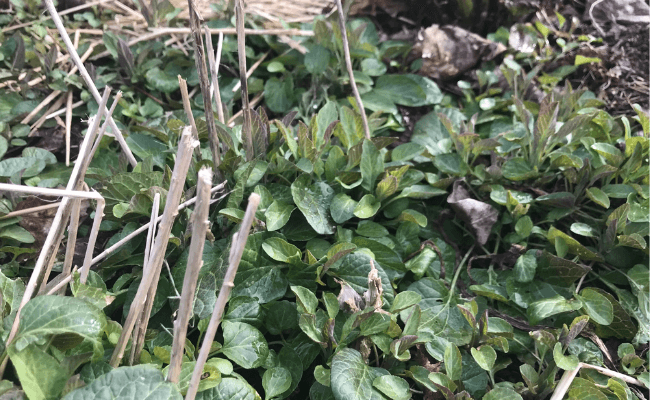
It's probably also time for the first nettle hunt of the year...
Grow for sale – book release
The book "Grow for Sale" is coming out in a new revised edition. At the same time, Part 2 "Our Best Vegetables" and a booklet about Seasonal Extension are coming out. Helena von Bothmer is leading a conversation on zoom with the authors Sanna Mattson Ringqvist, Jonas Ringqvist and Ylva Lundin this Monday at 7:00 PM
All three books are written for those of you who grow vegetables for sale. The books can already be ordered from https://widget.publit.com/odla-till-forsaljning_3339/page/1 and will soon also be available to order from the usual online bookstores.
…then sleep birch and heather…
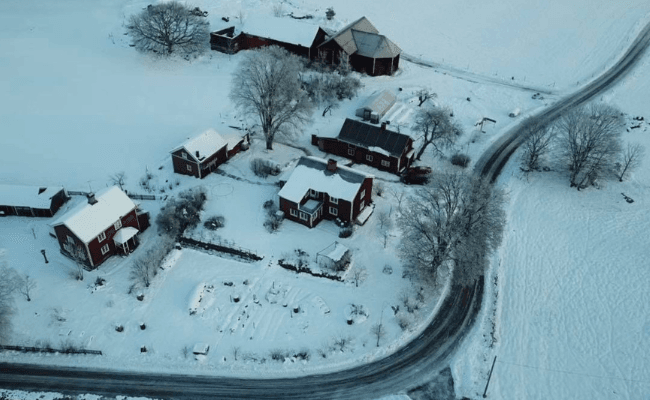
Fatty Ice Cream Buns in December, Christmas signage in October… Is the person who plants their tomatoes in December with lots of artificial lights in a basement the most dedicated grower? What is it about our culture of rushing that makes everything start so early?
No, that rush is not for me. I love December and January when the garden is dormant and I can direct my attention more inward, something that the stillness of nature really invites. In time, April, May and June will come when the small plants must not be neglected for a single day, when the ground needs to be prepared and the weeds kept away and when a few weeks' delay can mean a big loss. Spring has its charm with all its intensity. But first a proper winter rest.
The most common beginner's mistake in growing, do you know what it is? Well, it's over-growing too many seedlings and too early. What happens then? Well, if we don't have a perfect place (who does?) the plants become tall, lanky and pale (normally it is too hot and too dark in our homes for small plants). But even if you have a reasonably cool basement or garage that you have stuffed full of artificial light, another problem arises. A plant that is left in its pot for too long loses its growth rate!
With too many plants, it will be difficult to find space if they all have to be replanted many times into larger pots. There is also the risk that you yourself will be exhausted even before the main planting season has started. Keep in mind that your strength should last until the harvest, and that the harvest can last until December if you plan your cultivation well.
The next time you notice that you are on the verge of being stressed by your Facebook friends or the weekly newspaper reports about early sowing, think about this:
A plant that has not been left standing in a pot for an unnecessarily long time will establish itself more quickly once it is in place in the garden or greenhouse. The plant sown at the end of March will in many cases grow faster than the one sown in January because the plant sown later has a shorter time in the pot, has never been slowed down in its growth and quickly receives enough sunlight.
Åke Truedsson who maintains a gene bank of 800 tomato varieties that you can access by joining his tomato club , yes you see, he knows a lot about tomatoes. He recommends sowing time 20/3-5/4 for tomatoes that will then grow outdoors in pots and 10/3-20/3 for tomatoes that will grow in cold greenhouses. Only if the final location of the tomatoes is a heated greenhouse (how justifiable is that from an energy point of view?) is there a reason to sow them 25/2-15/3, according to Åke who lives in Skane.
From what I understand, this means it's safe to indulge in winter sports and meditation, closet cleaning and video conferencing for a while longer. Sleep tight, you little video guy!