I think the whole winter growing thing is a bit overhyped. I appreciate the winter rest during December and January, eating from the stores and not thinking about growing.
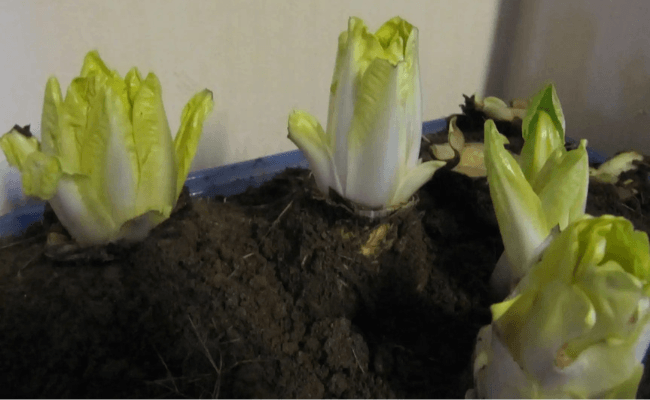
Well... it's not entirely true. Indoors, the endive, our favorite salad, is growing. The plants were grown outside in the summer, the roots were harvested and planted in plastic crates that were placed in the root cellar. One crate at a time moves into the kitchen. After two weeks at room temperature under a blackout cloth, we can harvest the sought-after endives!
Outside in the field, some are still left from the summer as well; kale, leeks, winter salad, and spinach dock. They are not growing because it is dark and cold, but they are there and can be harvested carefully little by little.
When February begins, my growing rest is over. Then the indoor cultivation of sprouts and microgreens on the windowsill begins. It is so wonderful to get the energy kick that fresh superfood provides and to awaken the desire to fiddle with seeds and soil.
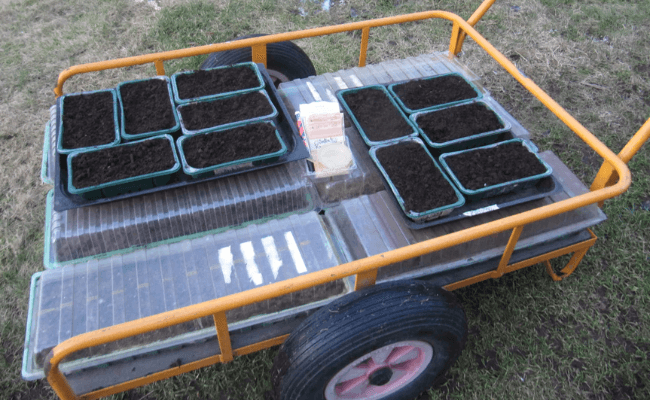
Even outside, it is good to sow, in a cold frame and in a cold greenhouse. There are many cold-resistant plants whose seeds can withstand lying in cold soil and waiting for the right opportunity to germinate. They become strong plants that are hardy from the start. One favorite I have is Namenia, a German leaf cabbage (Stielmus) that is fast and cold-resistant, related to the Asian Mizuna but faster, tastier, and easier to grow, in my opinion. Even hardier is the salad mustard. I usually grow a variety called Southern Giant Curled Mustard (Runåbergs). It germinates at +5 degrees and the mature plant can withstand many degrees below zero. Spinach, arugula, and winter purslane are also good to sow early in a cold frame and cold greenhouse, as well as certain salad varieties like Rouge d’Hiver and Oak Leaf Lettuce. For it is indeed a quality of life to be able to harvest your own green leaves early in the spring! ...So yes, if this is winter cultivation, then I am probably for it anyway.
What one needs to think about when sowing early is that the soil needs to be properly moistened to depth already in the autumn.
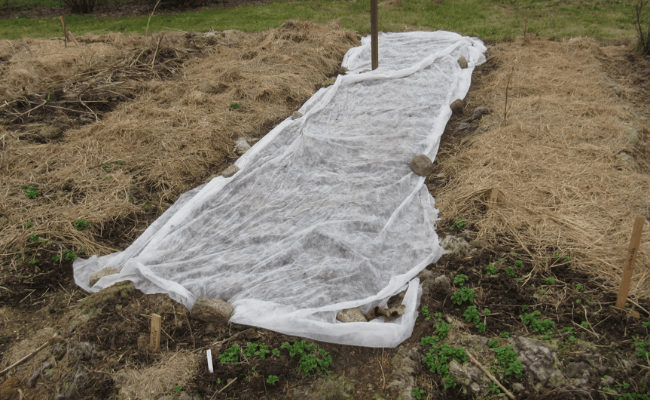
It is actually possible to sow in open ground as well. There I have sown carrots, black salsify, parsley, and dill and laid a fiber cloth over. There is no guaranteed hundred percent emergence from that sowing, but with a little luck, it can yield early and good plants that have already managed to establish themselves when the early summer drought sets in. And otherwise, it is possible to do supplementary sowing later.
The very earliest salad you get when salad plants, sown at the end of summer, overwinter in a greenhouse or cold frame. I lay cultivation fabric and bubble wrap over, and the plants remain green underneath, just waiting quietly for the spring sun to peek out. If you want such salad, you need to write in the cultivation of seedlings in your sowing calendar around August 25.